Club Med just answered it. And the R2 billion answer is already reshaping how the world sees South Africa.
The Inauguration That Changed the Game
On 6 October 2026, Club Med formally inaugurated its first South African resort, Club Med South Africa Beach & Safari, in KwaDukuza, KwaZulu-Natal. The property welcomed its first guests on 4 July 2026, but the global inauguration ceremony, attended by Tourism Minister Patricia de Lille, investors, traditional leadership, and community representatives, marked the official arrival of the brand’s new Beach & Safari concept worldwide.
I think what’s most striking here isn’t the scale. It’s the format. Club Med has built something that doesn’t really exist anywhere else in the world: a single booking that combines an Indian Ocean beach holiday at Tinley Manor with a luxury tented safari at Vikela Safari Lodge, set within an approximately 18,000-hectare private Big Five reserve in northern KwaZulu-Natal.
The Numbers Behind the R2 Billion Bet
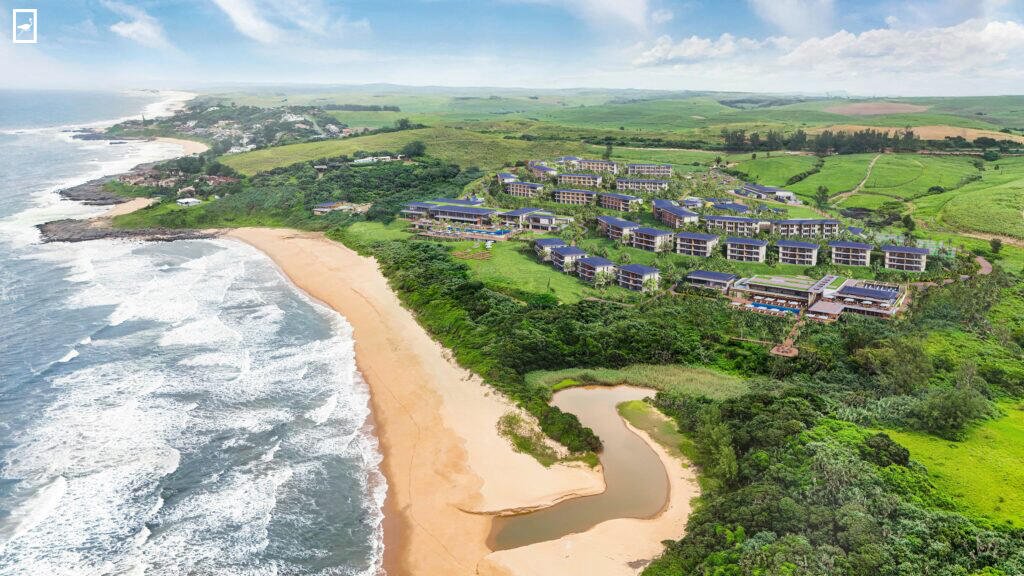
The beach resort sits on a 32-hectare oceanfront site about 30 minutes from King Shaka International Airport. It offers more than 400 rooms, suites, and villas, four pools, dedicated family and adults-only zones, and restaurants showcasing South African flavours and regional produce.
Included activities range from Club Med’s first surf school in South Africa to sailing, stand-up paddleboarding, padel, yoga, and the brand’s signature flying trapeze. Vikela Safari Lodge, sold exclusively as part of a combined stay, provides luxury tented accommodation and guided game drives.
The project cost more than R2 billion. Tinley Leisure developed it with South African capital; Club Med operates it. Construction supported over 2,300 direct and indirect jobs, and the resort created 600 permanent direct positions, with more than 80% of staff drawn from local communities.
Minister de Lille described the development as “a vote of confidence in South African enterprise, our people and the future of our tourism industry,” underscoring how the project has created meaningful employment and opportunity for surrounding communities.
Why This Matters Now
South Africa’s luxury travel sector is already surging. Safari bookings jumped 50% in early 2026, and luxury travel now sits 211% above 2019 levels. Google search interest in safari holidays surged 90% in the last quarter, according to trade coverage, with travellers demanding immersive wildlife experiences paired with genuine luxury.
Marriott Bonvoy’s research identified “lux-scaping,” booking a luxury stay at the start or end of a holiday, as a defining 2026 trend. Two-thirds of South Africans (64%) have already engaged in it, surpassing the EMEA average of 59%. Premium leisure now accounts for more than 80% of Travel Counsellors South Africa’s leisure bookings, up from 60% in 2024.
In my experience covering luxury travel, the operators who win are the ones who read these signals early. Club Med didn’t just read them. They built a R2 billion product around them.
The Michelin Effect and the Broader Luxury Shift
The Club Med launch lands in a moment when South Africa’s luxury credentials are being globally validated. Earlier this month, two Michelin Keys put the Soutpansberg mountains in Limpopo firmly on the international luxury map, with eco-lodge Few & Far Luvhondo receiving the distinction from the Michelin Guide. The property is now among fewer than 700 hotels worldwide to hold two Keys.
Silvan Safari was named both Africa’s Leading Luxury Lodge and South Africa’s Leading Luxury Lodge at the 2026 World Travel Awards. And One&Only Cape Town, alongside Shamwari Private Game Reserve, launched a seven-night “City & Safari” itinerary pairing Cape Town’s cultural and culinary scene with a Big Five safari in the Eastern Cape.
The pattern is clear: luxury travellers want contrast, flexibility, and depth. They’re not choosing between beach and bush. They want both, in one trip, without friction.
The Balanced View
Not everyone is convinced the all-inclusive model translates seamlessly to the African luxury market. The format is designed to push longer stays and attract higher-value international visitors, but the beach and safari pairing is a new product, not a rebrand of an existing Club Med village. Whether it resonates with the ultra-high-net-worth segment that typically favours boutique, owner-operated lodges remains to be seen.
Edward Xu Xiaoliang, Co-CEO of Fosun International and Chairman of Club Med Lifestyle Group, framed the entry as part of a broader strategy: “Club Med’s entry into South Africa marks an important step for Fosun to achieve win-win outcomes for all stakeholders together with local South African partners”.
Stéphane Maquaire, President and CEO of Club Med, added: “By bringing together the Indian Ocean coastline and the Big Five safari experience, we are offering our guests a new way to discover this extraordinary country”.
Summary
Club Med’s R2 billion Beach & Safari resort in KwaDukuza represents more than a new property. It’s a structural bet that the future of luxury travel lies in seamless, multi-experience journeys that combine beach, bush, and community impact. With safari bookings up 50% in early 2026, luxury travel running 211% above 2019 levels, and 64% of South Africans already engaging in lux-scaping, the timing aligns with where the market is actually moving. The question now is whether the all-inclusive model can compete with the boutique lodges that have long defined African luxury. The answer will shape how the industry builds for the next decade.
Comments
Please login to comment
Login